recent posts


Tags cloud
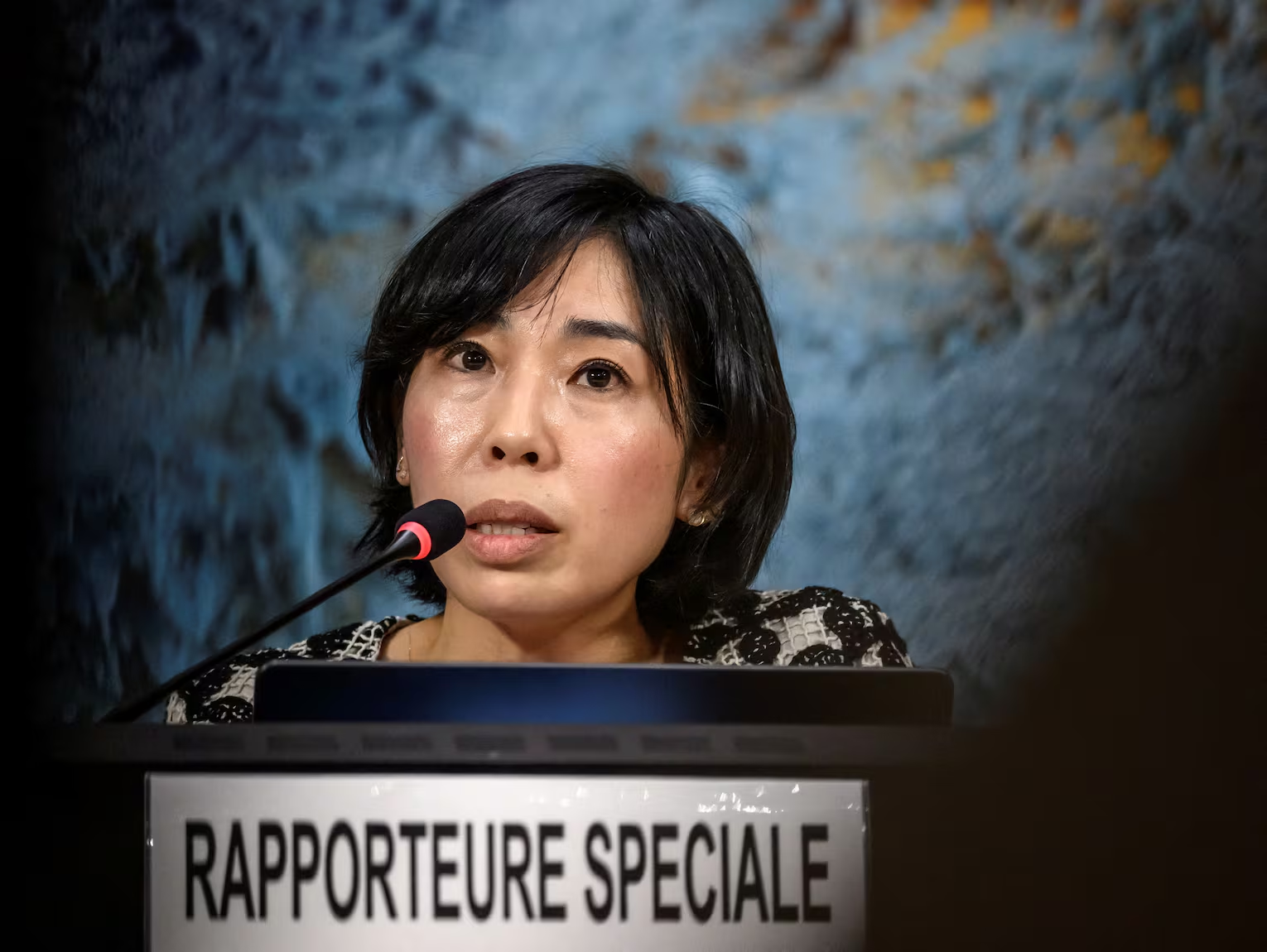
“Silence is the worst thing”: UN Special Rapporteur on Human Rights in Iran, Mai Sato, issues an urgent warning.
Mai Sato, the United Nations Special Rapporteur on the human rights situation in Iran, has urged the international community not to overlook the Iranian people as diplomatic negotiations between the United States and Iran continue. She warned that remaining silent in the face of ongoing abuses would only deepen the crisis.
Speaking about the current situation, Sato described Iran as facing two overlapping challenges: a severe internal crackdown and the humanitarian consequences of recent conflict. According to her, thousands of people have been affected by arrests, alleged torture, executions, displacement, and damage to civilian infrastructure.
Growing Concerns Over Human Rights
Human rights organizations have reported a sharp rise in politically motivated executions and arrests in recent months. Since March 2026, dozens of people have reportedly been executed on political charges, while thousands have been detained on accusations of collaborating with foreign enemies.
Sato said the government has continued to rely on arrests, executions, and other forms of repression to suppress dissent. She stressed that these practices did not begin with the recent conflict but have remained a consistent feature of the country’s response to political opposition.
Internet Shutdowns and Civilian Impact
The UN expert also highlighted the effects of one of the longest nationwide internet shutdowns in Iran, saying it made it extremely difficult to document events and communicate with those affected. Combined with an already struggling economy, the disruption placed additional pressure on ordinary citizens.
She noted that civilians have carried the burden of both military conflict and domestic repression while having little influence over the political decisions affecting their lives.
Execution Numbers Difficult to Verify
Sato explained that obtaining accurate casualty and execution figures remains challenging because official data is limited and independent access to the country is restricted.
She said more than 150 executions have reportedly taken place since the conflict began, including many involving national security or espionage charges. Human rights groups have raised concerns that some defendants may not have received fair trials or adequate legal representation.
Calls for International Action
Although Iran has not allowed the UN Special Rapporteur to visit the country, Sato said her office continues to gather information through verified reports, witness testimonies, and official communications.
She noted that international pressure has, in some cases, contributed to delaying executions and believes continued public attention remains important.
“Silence is the worst thing,” Sato said, emphasizing that global awareness and diplomatic engagement can still make a meaningful difference.
Human Rights Should Be Included in Negotiations
Sato expressed concern that ongoing negotiations between Washington and Tehran are focused primarily on military issues, nuclear commitments, sanctions relief, and reconstruction, while human rights receive little attention.
She urged negotiators to include concrete commitments such as:
- A moratorium on executions.
- The release of arbitrarily detained prisoners.
- Greater transparency regarding missing persons.
- Restoration of unrestricted internet access.
- Protection of civil liberties and civic space.
- Accountability for human rights violations.
- Guarantees that reconstruction assistance benefits ordinary citizens.
According to Sato, incorporating these measures into any future agreement could help improve conditions for the Iranian people. Without them, she warned, there is a risk that any deal will simply restore the pre-conflict status quo without addressing long-standing human rights concerns.